
By Tom Stefanac (VA3VWX)
I already had a personal Elecrow ThinkNode M1. It is a compact handheld with an nRF52840, SX1262 LoRa radio, a 1.54″ e-ink screen, and GPS. I run Meshcore on mine. The same hardware can also run Meshtastic. I bought a second unit, then designed and 3D-printed a water-resistant enclosure so I could leave that node outdoors, high on a pole above my house, as an always-on mesh relay named North-Mimico.
A personal node first
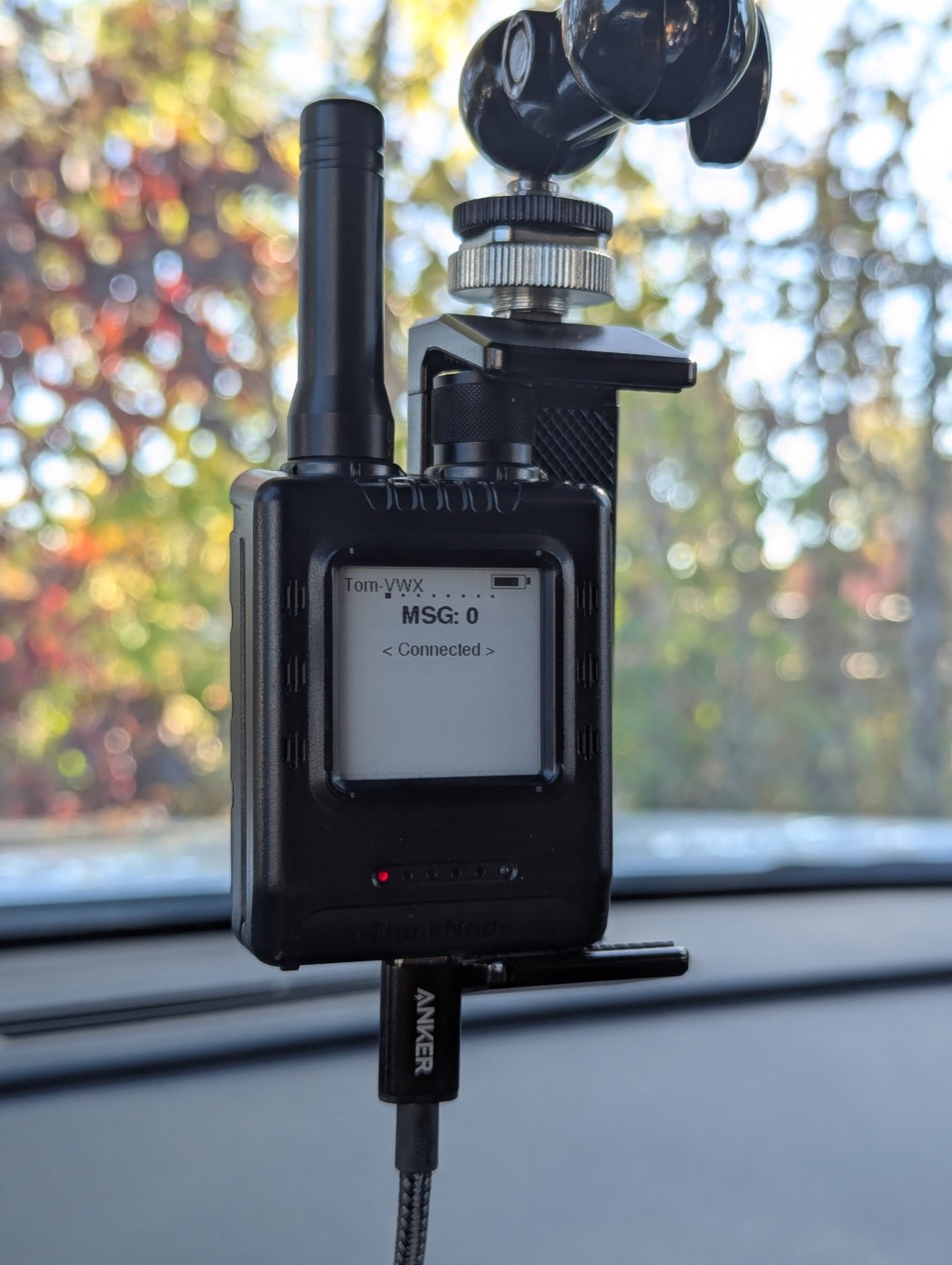
This is the mobile ThinkNode I already carried. It sits on the dash and the e-ink shows Tom-VWX. A handheld in a car or a pocket is only as useful as the mesh it can hear. When you drop behind a hill or into a neighbourhood of brick and trees, that little radio needs a neighbour that is higher, quieter, and always listening.
Why a high, always-on node helps
On a LoRa mesh these radios are not like a ham VHF/UHF repeater with an input and output pair. Each node is a peer. Packets hop from radio to radio. A node that sits high, with a clear sky, and stays powered around the clock becomes the hop everyone else can use.
For me, the portable M1 in the car can talk through North-Mimico instead of needing a direct path to the next station. For neighbours, it is one more reliable hop in the local mesh. More messages get through. Routes stay up when a handheld goes in a pocket or a house node is buried indoors. The whole area gets a little more coverage than any single portable can give on its own.
Designing a weather-resistant enclosure
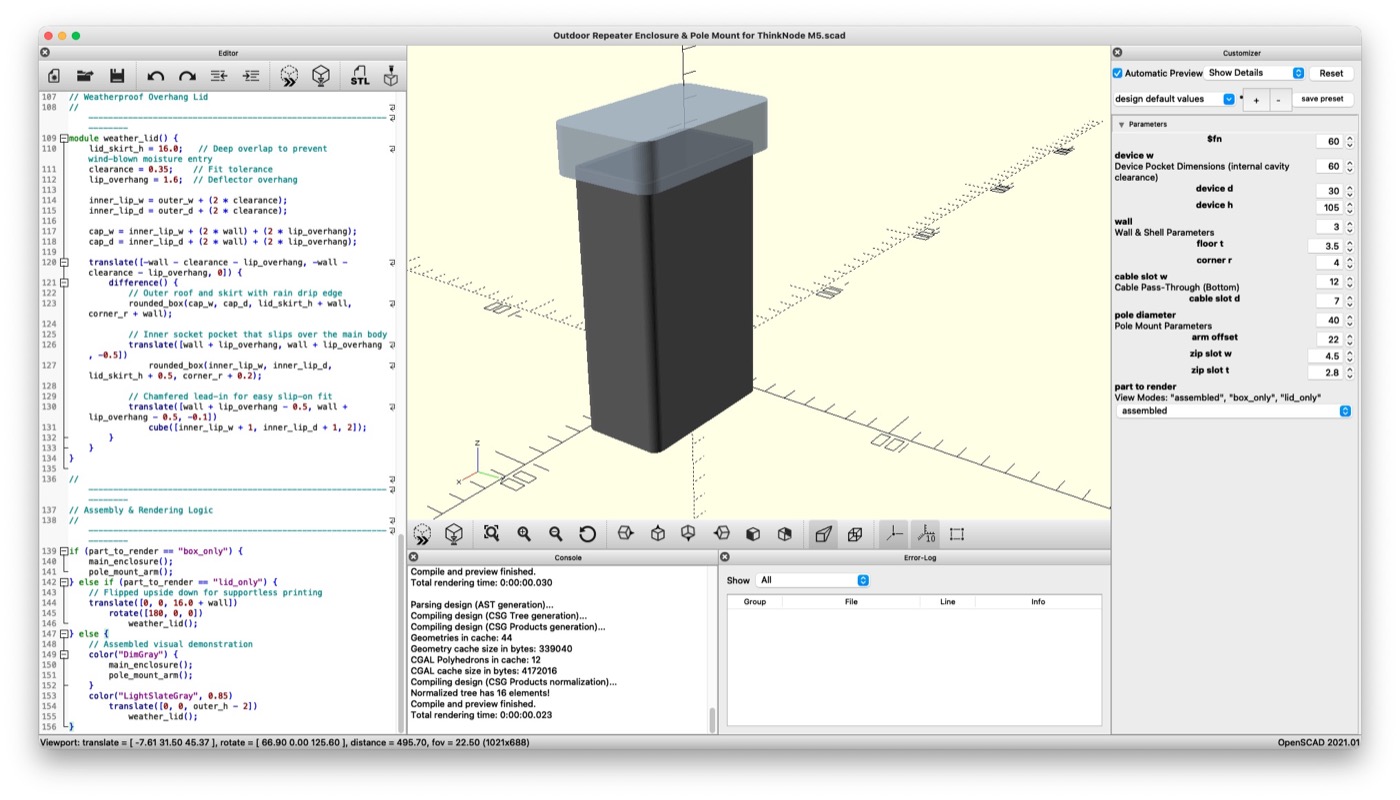
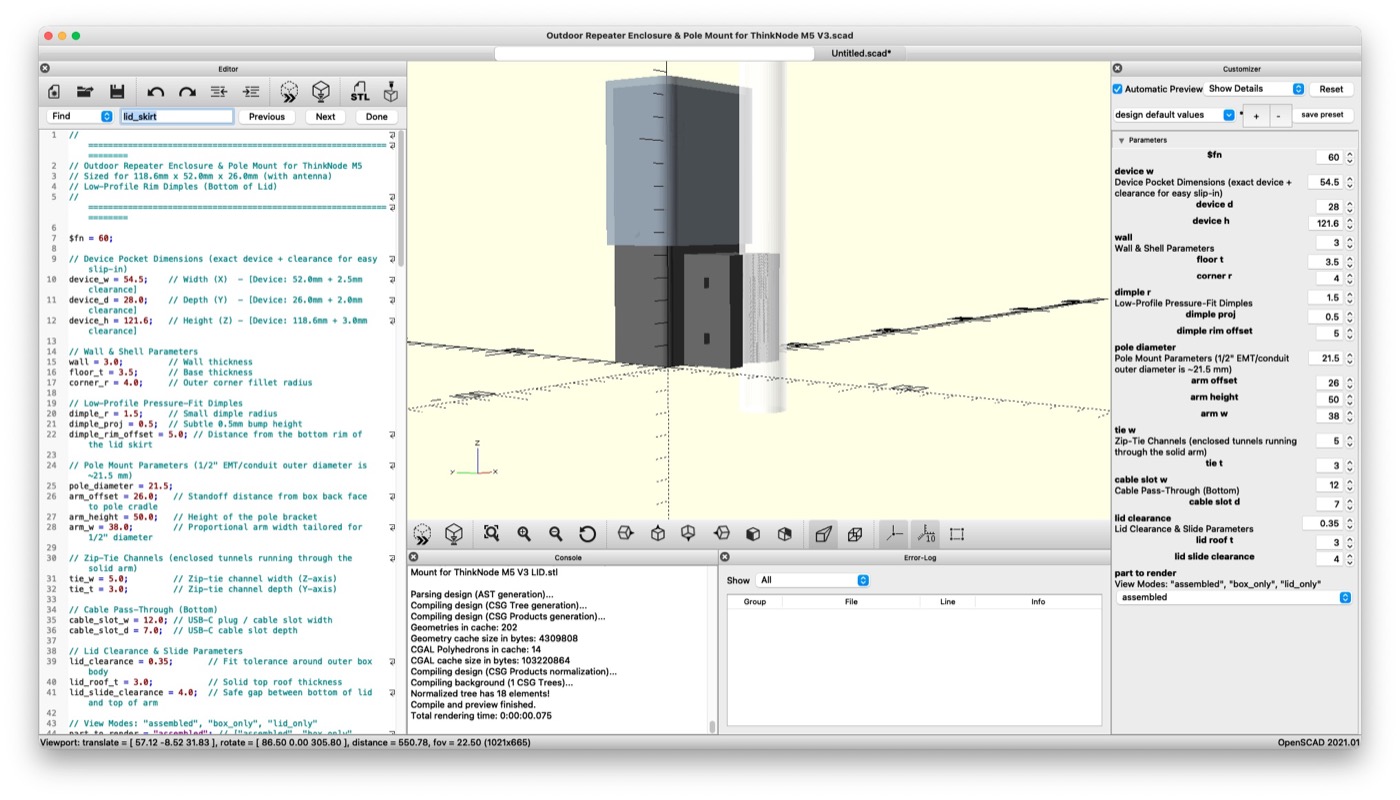
I modelled the outdoor box in OpenSCAD. Here is the design if you want to look at it. The printable files are on Thingiverse: a box, a lid, and a short cap for a whip antenna.
I started with a simple rectangular body and lid, then added a side arm sized to clamp onto a pole. The CAD files mention other ThinkNode variants, but the radio that goes in the pocket is the same M1 I already use on the dash.
Printing it in PETG
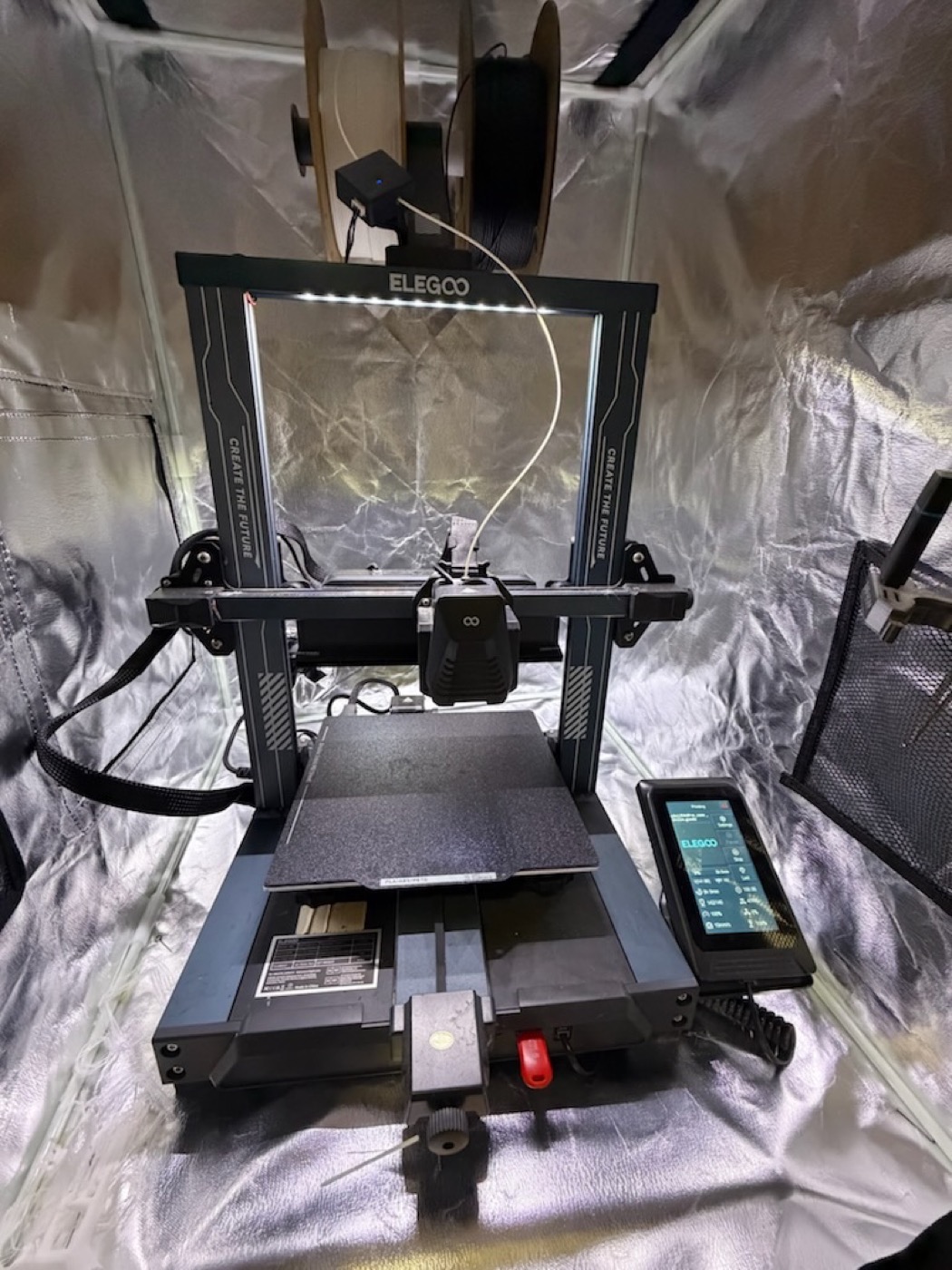
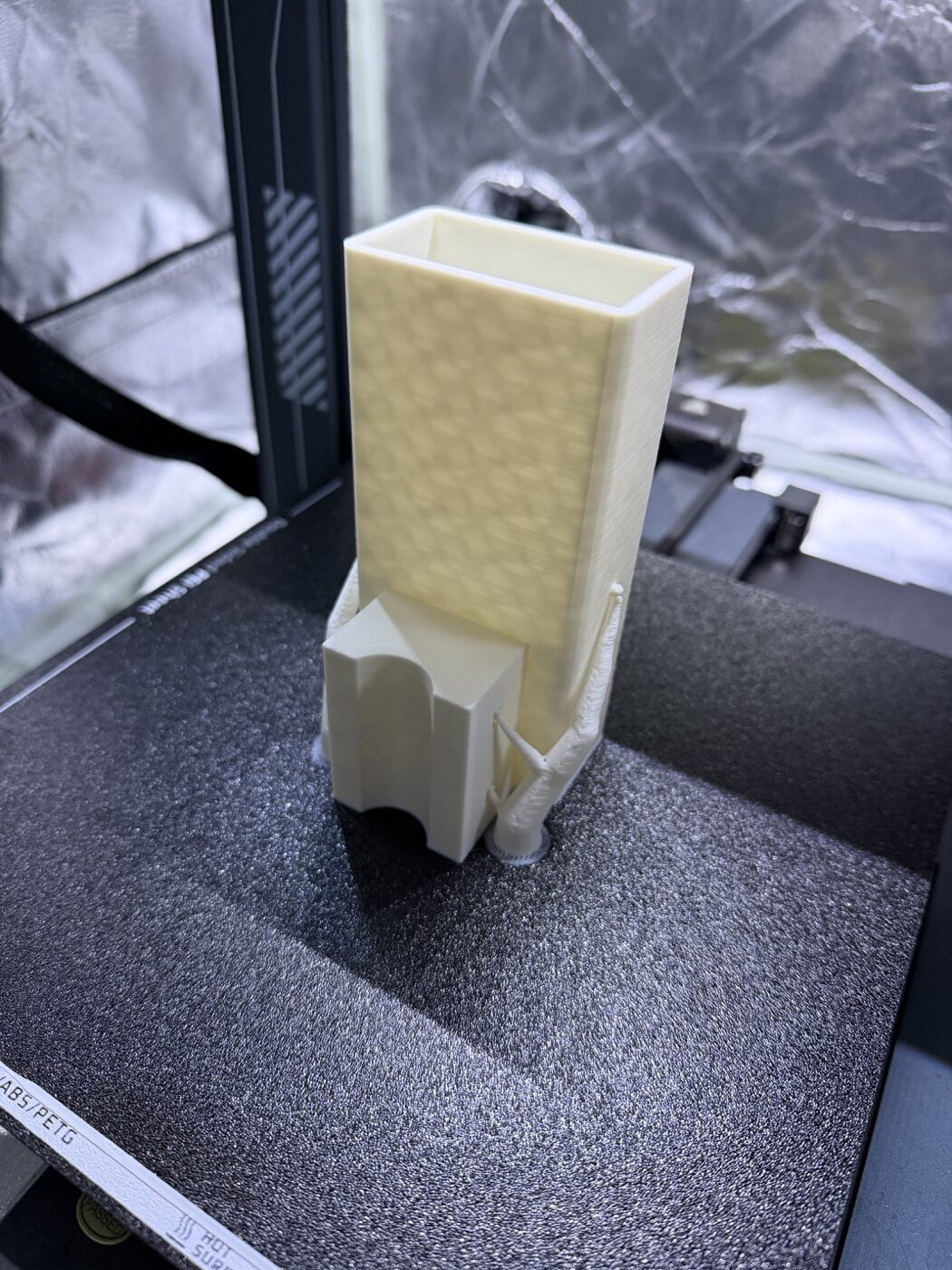
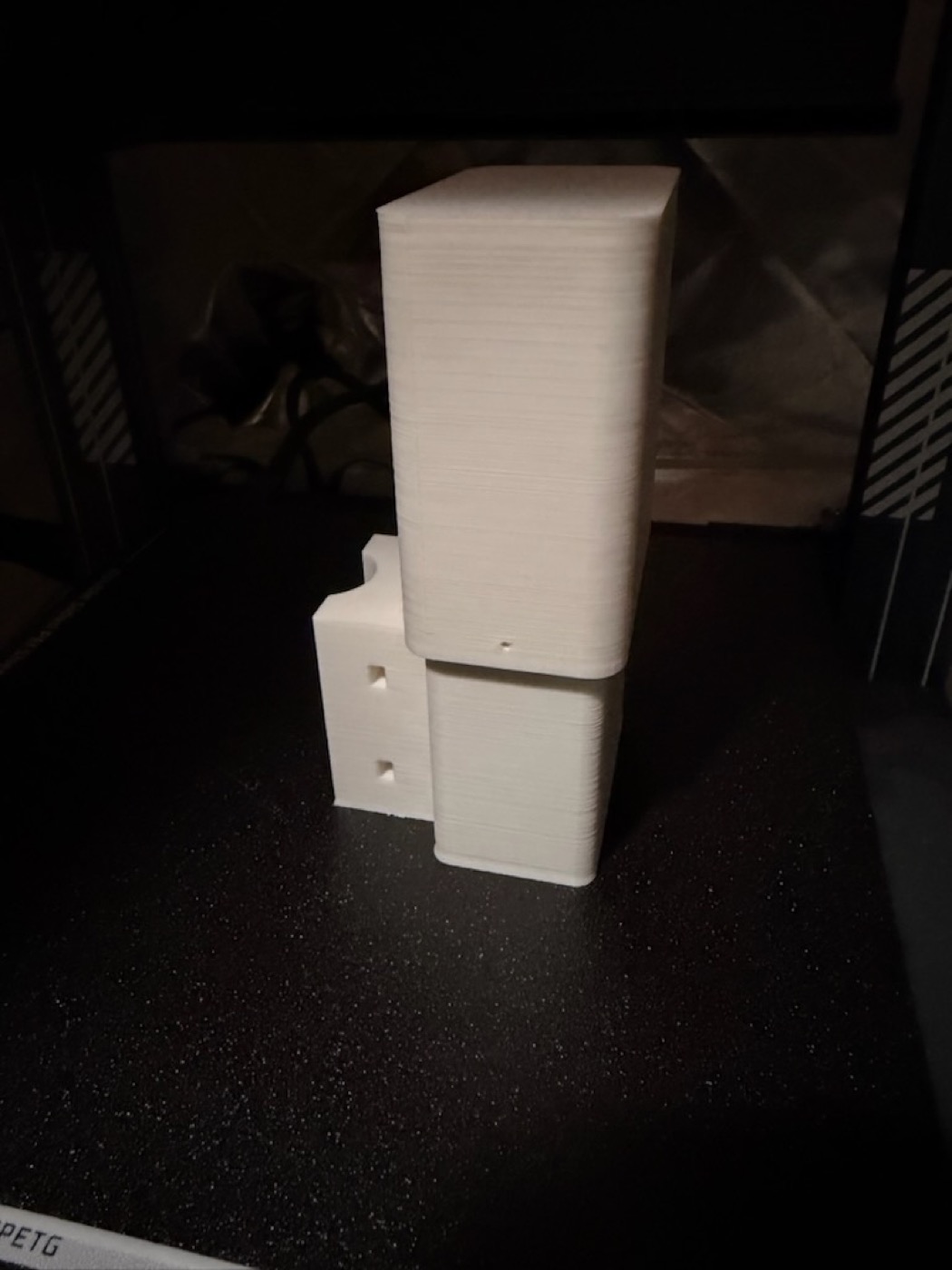
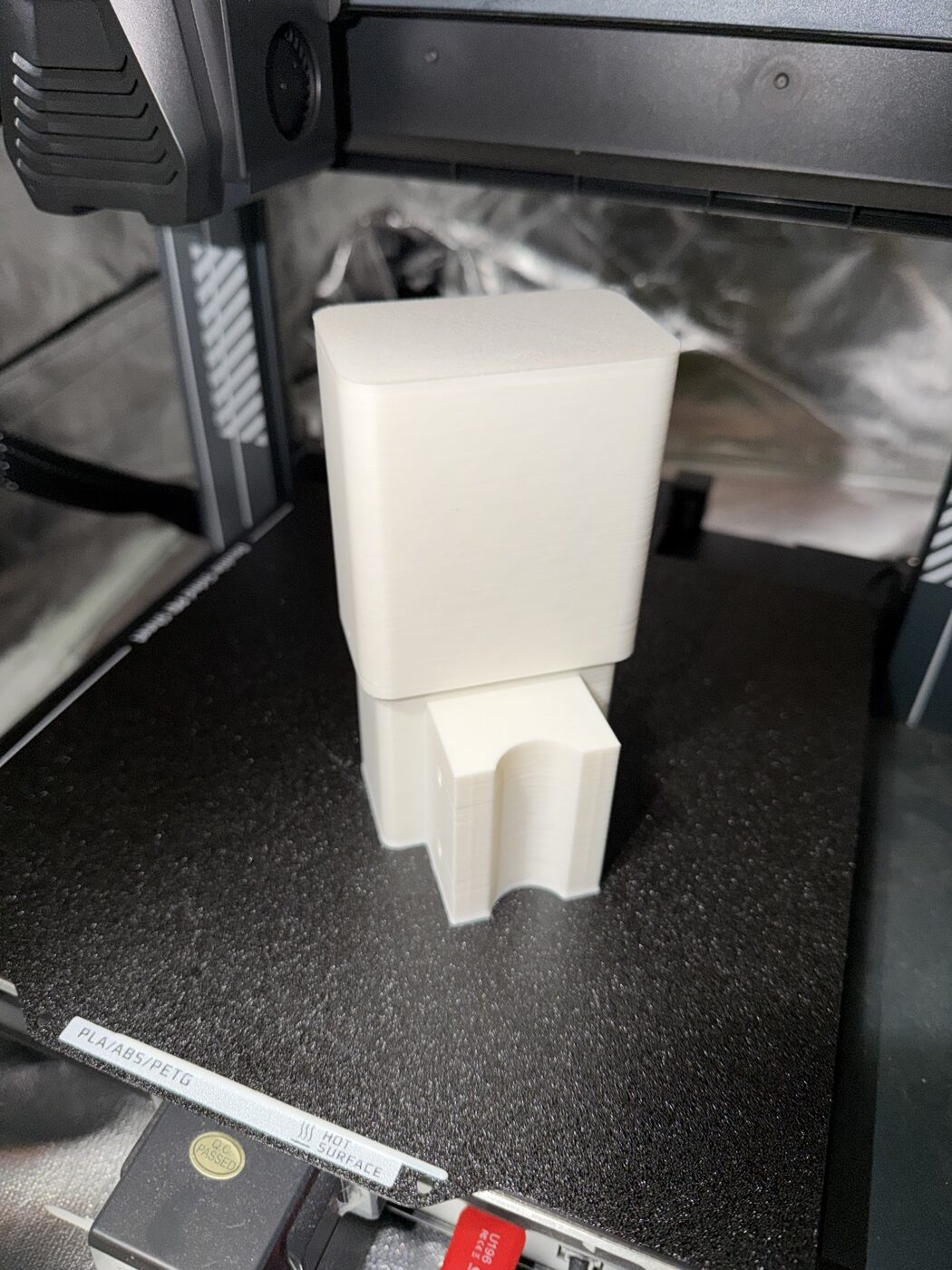
The case was printed in PETG on an Elegoo desktop printer. PETG holds up better outdoors than plain PLA, especially in sun and temperature swings. First came the hollow body with an integrated saddle for the pole, then the lid. Two mounting holes go through the saddle, and the bed is labelled PETG so the filament does not get mixed up.
Fitting the radio and sealing it
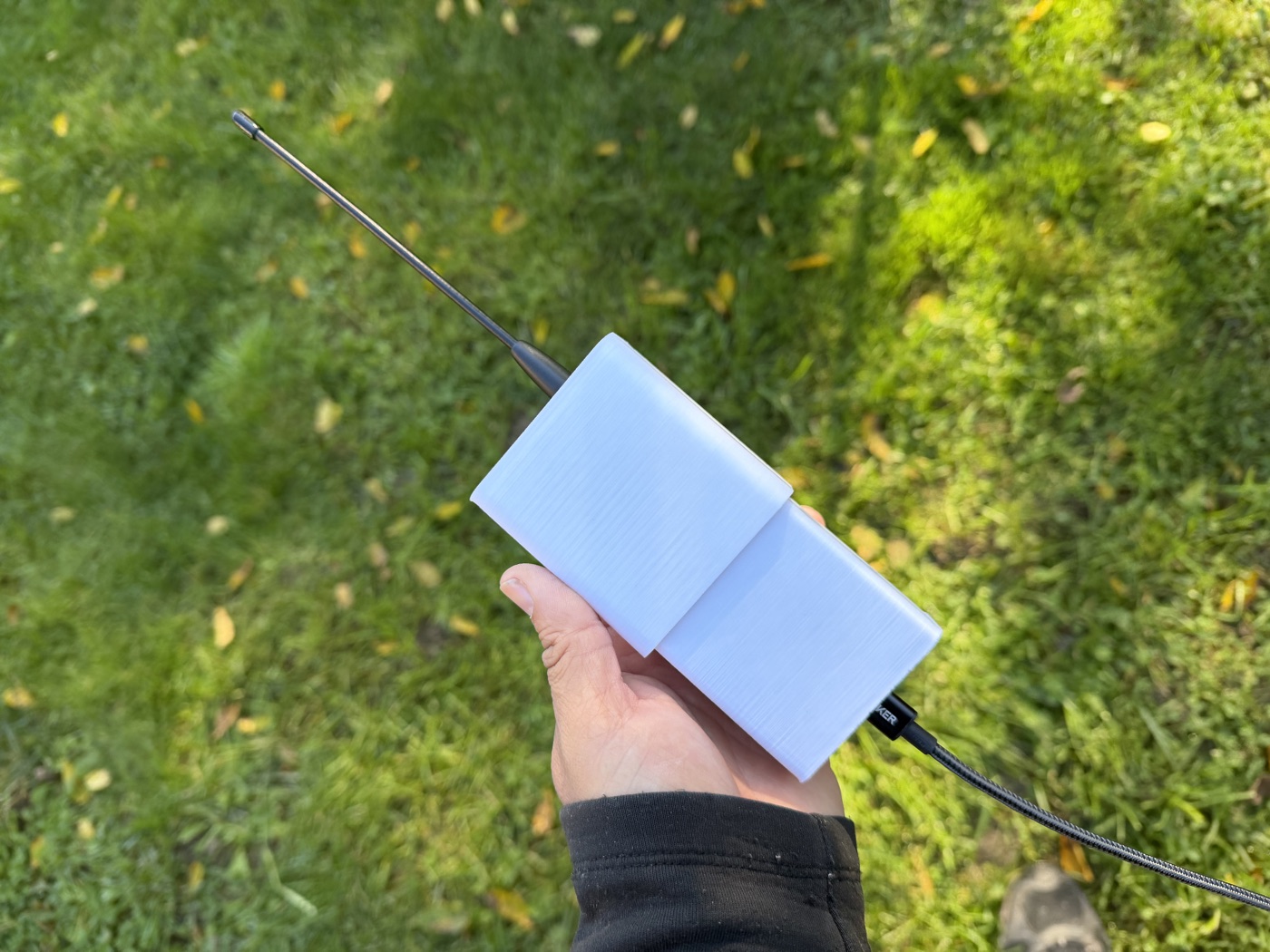
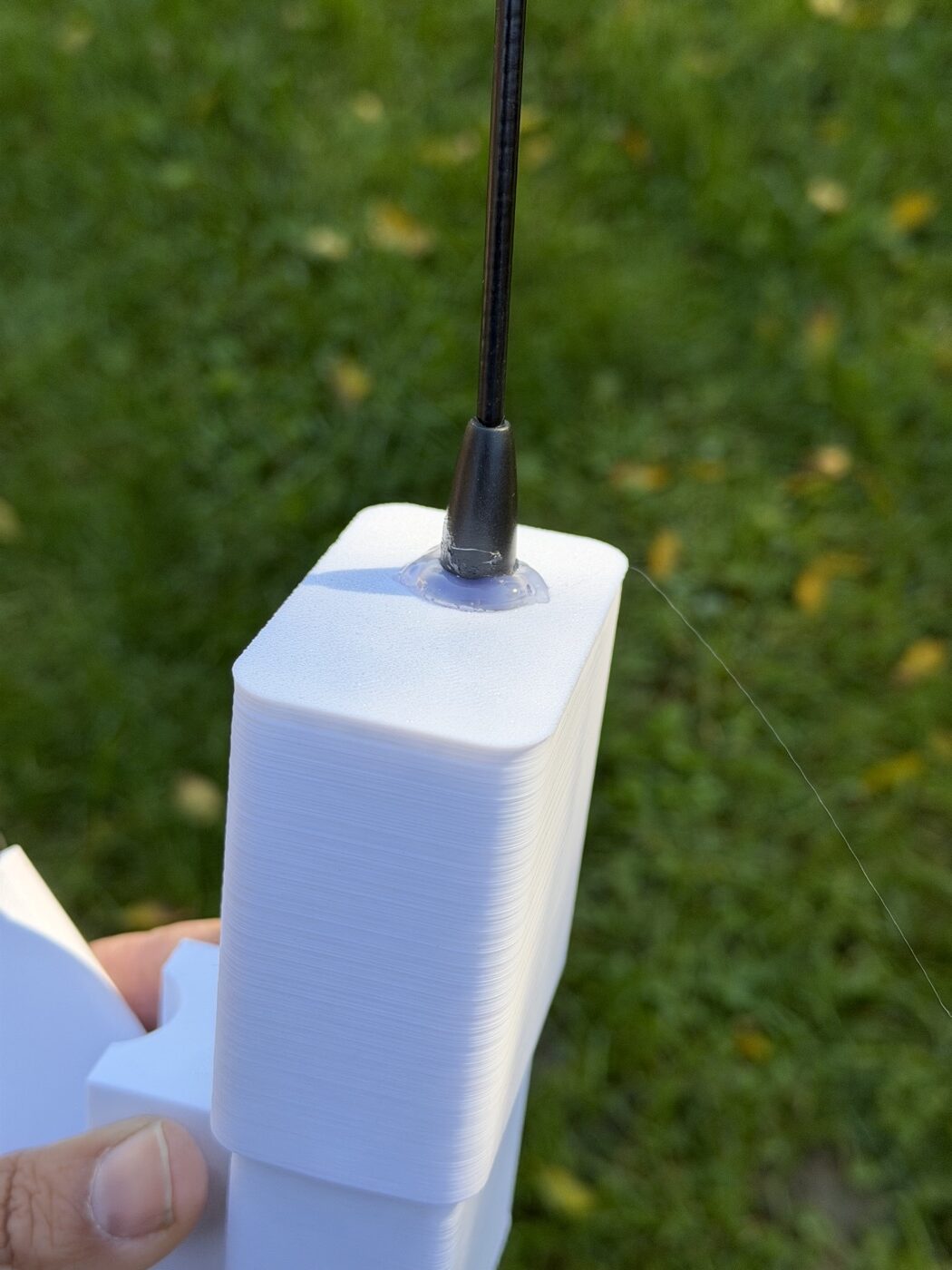
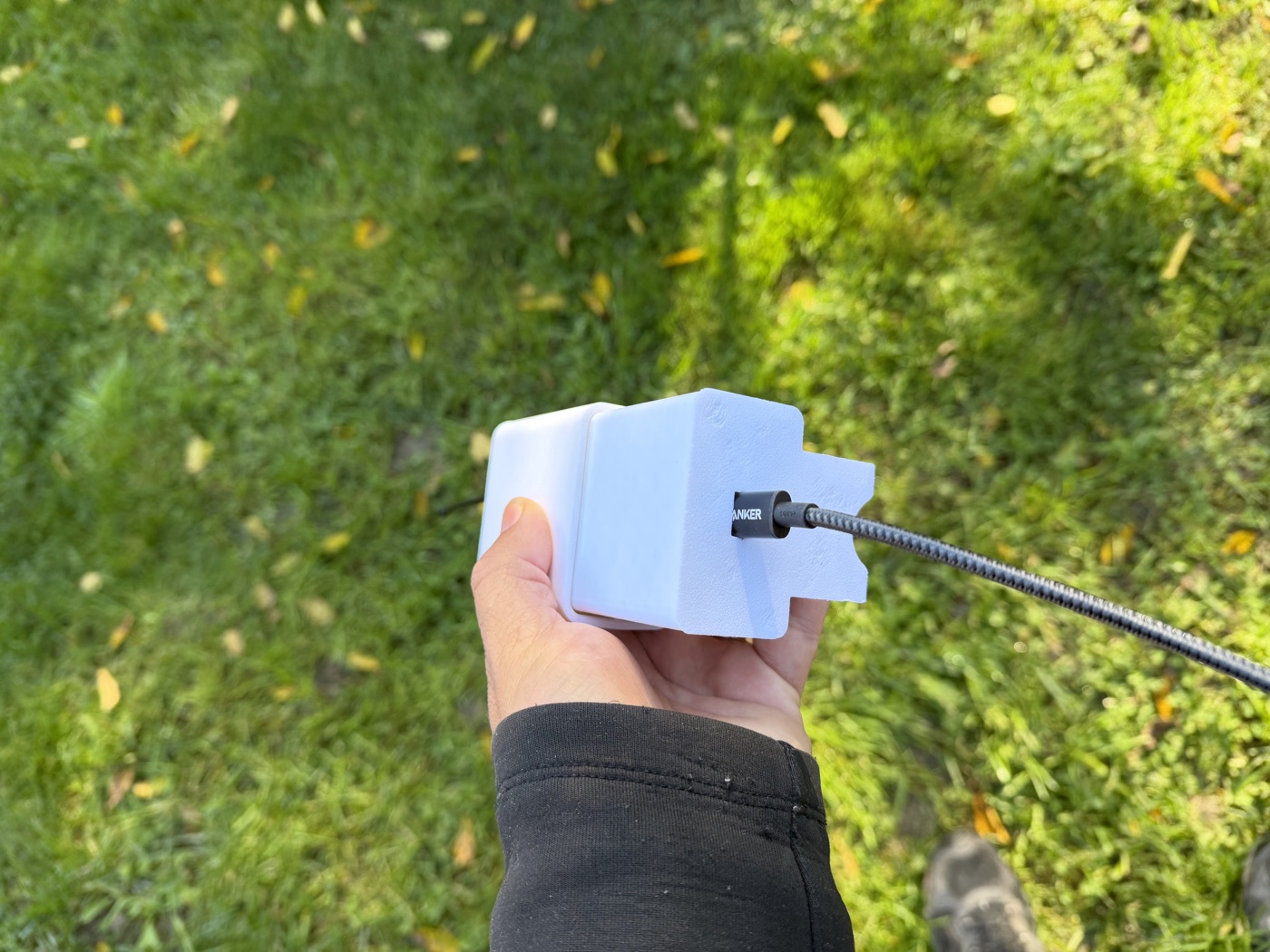
A test fit of the black ThinkNode in the white sleeve leaves the antenna and top knob clear. The finished box gets a whip on top, a power cable out the bottom, and a ring of clear silicone where the antenna passes the lid. That seal is what lets a printed box live outside.
Up the pole
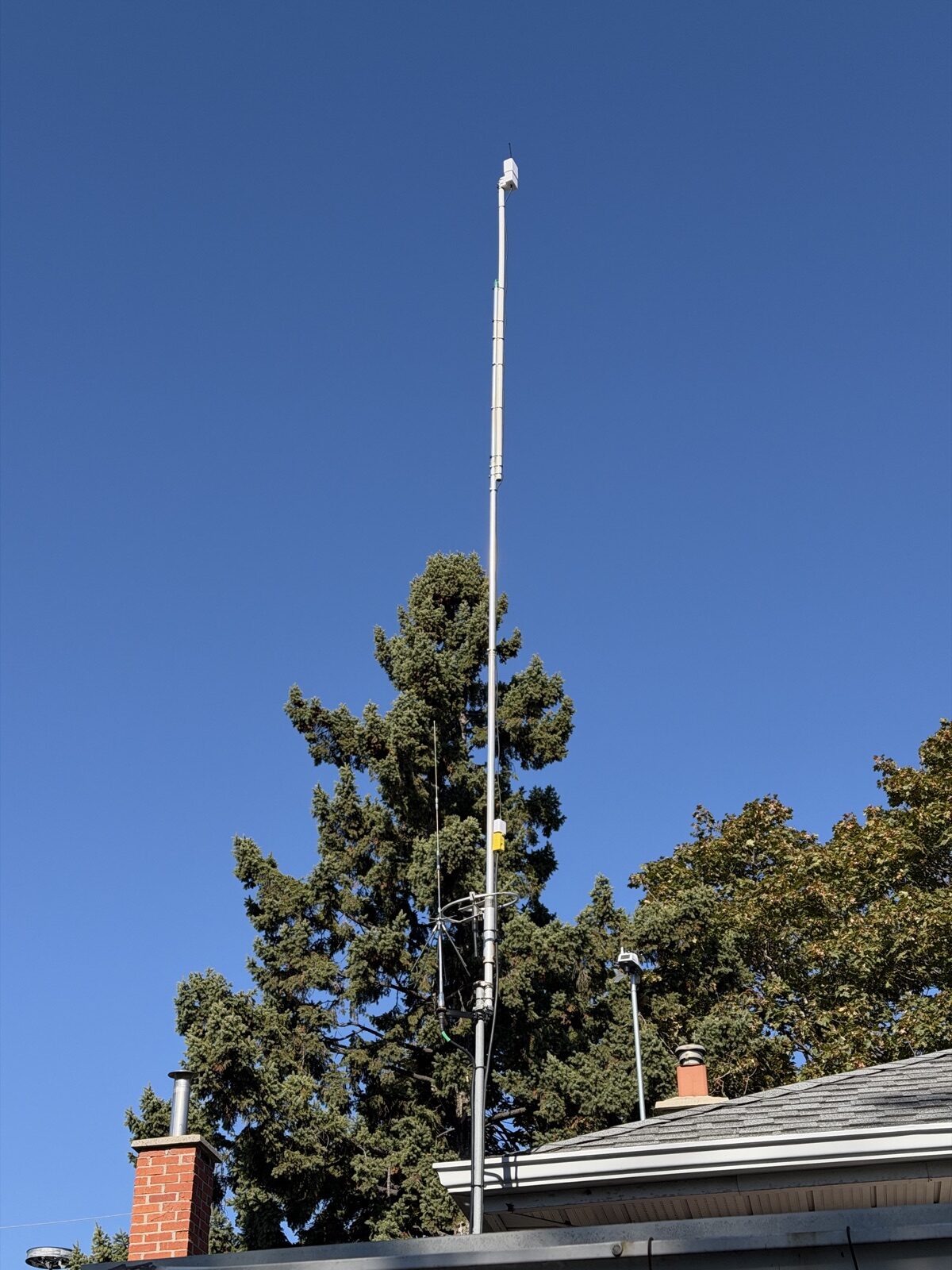
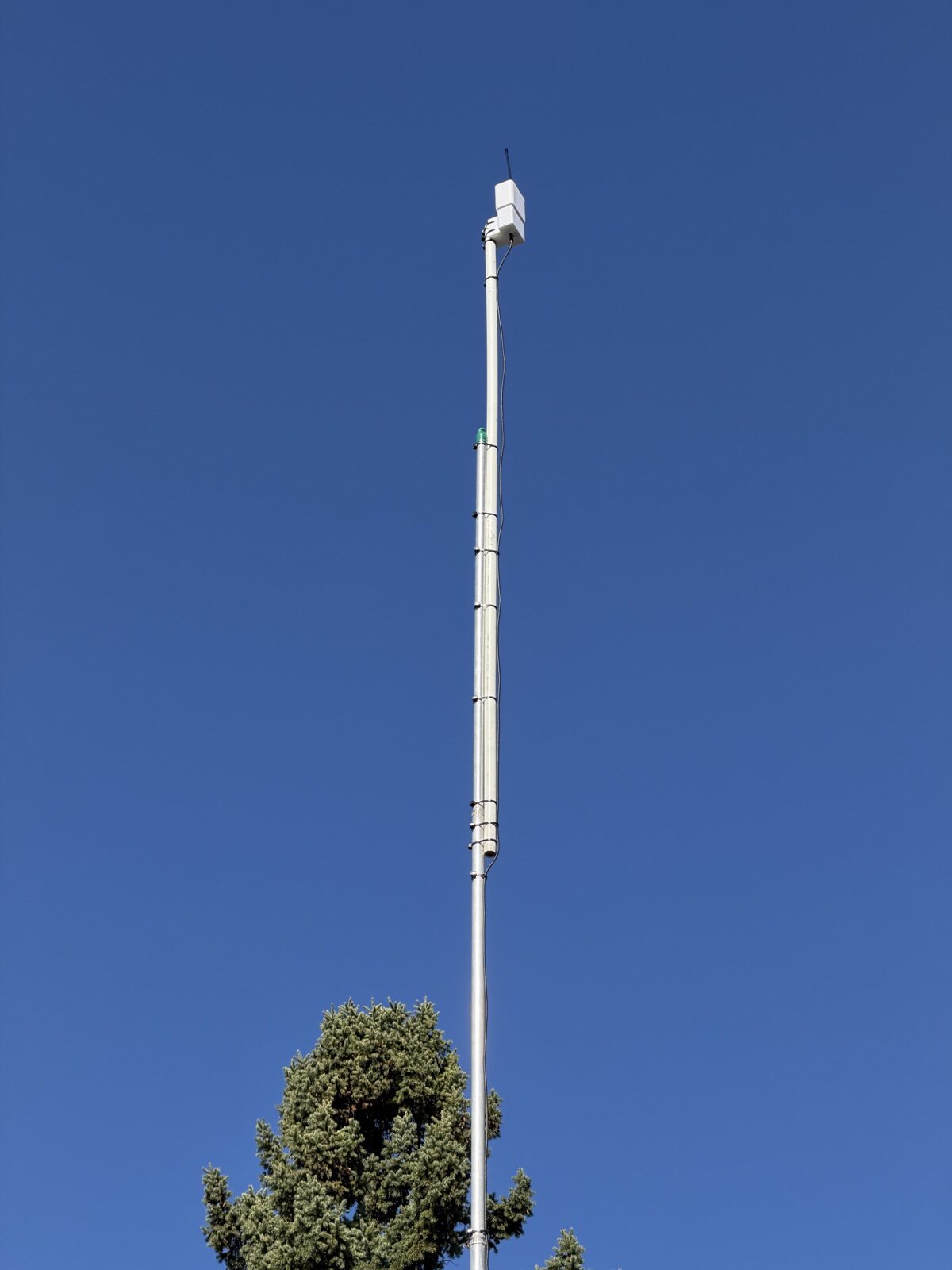
The enclosure now sits at the top of a tall mast above the house, well clear of the nearby evergreen. The antenna points up and the feed cable is tied down the pole. That height is the whole point. North-Mimico stays up, stays on, and gives my portable node, and anyone else in range, a reliable hop on the local mesh.
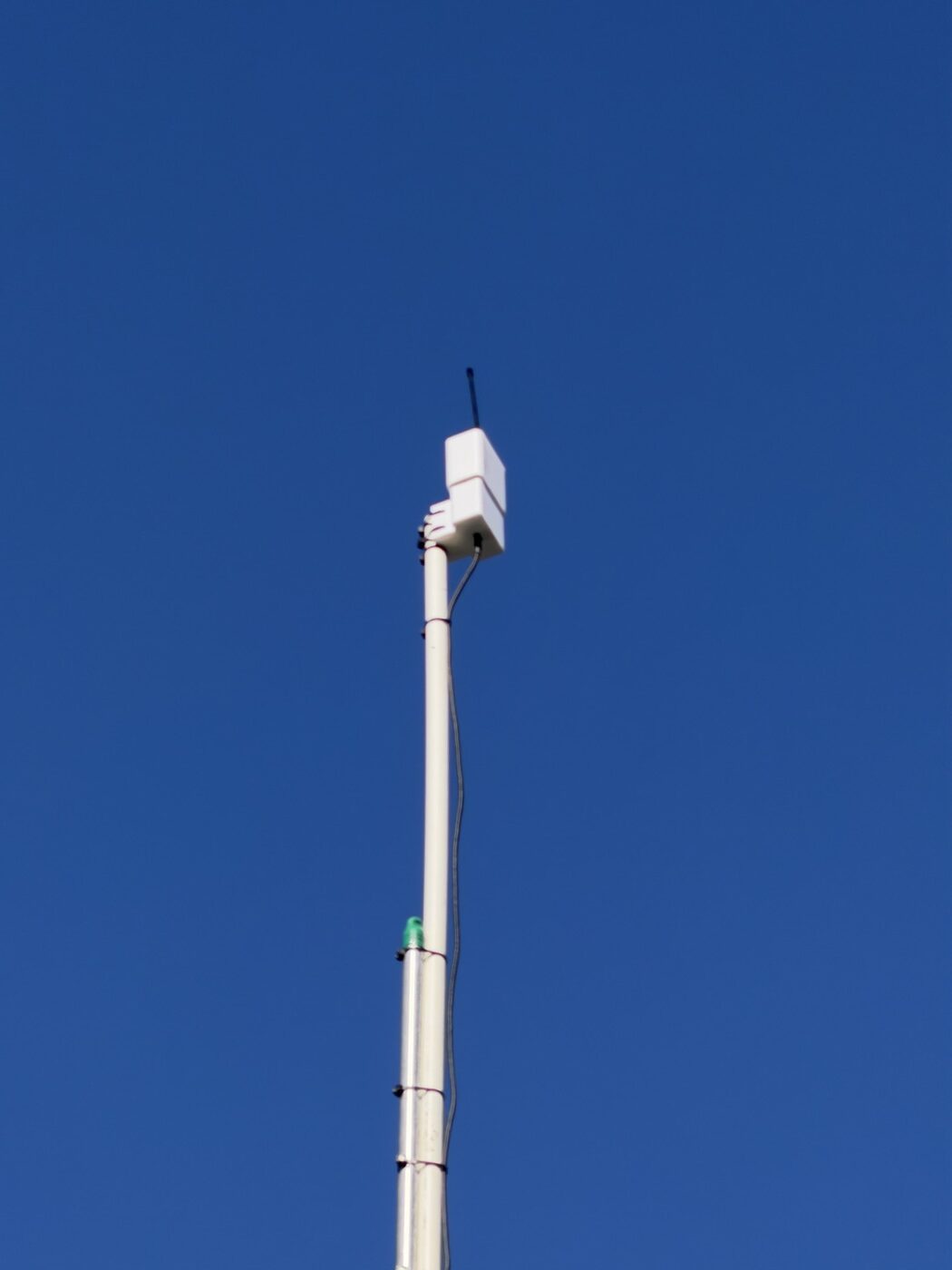
A couple of extra shots if you want a closer look. Click to open them.
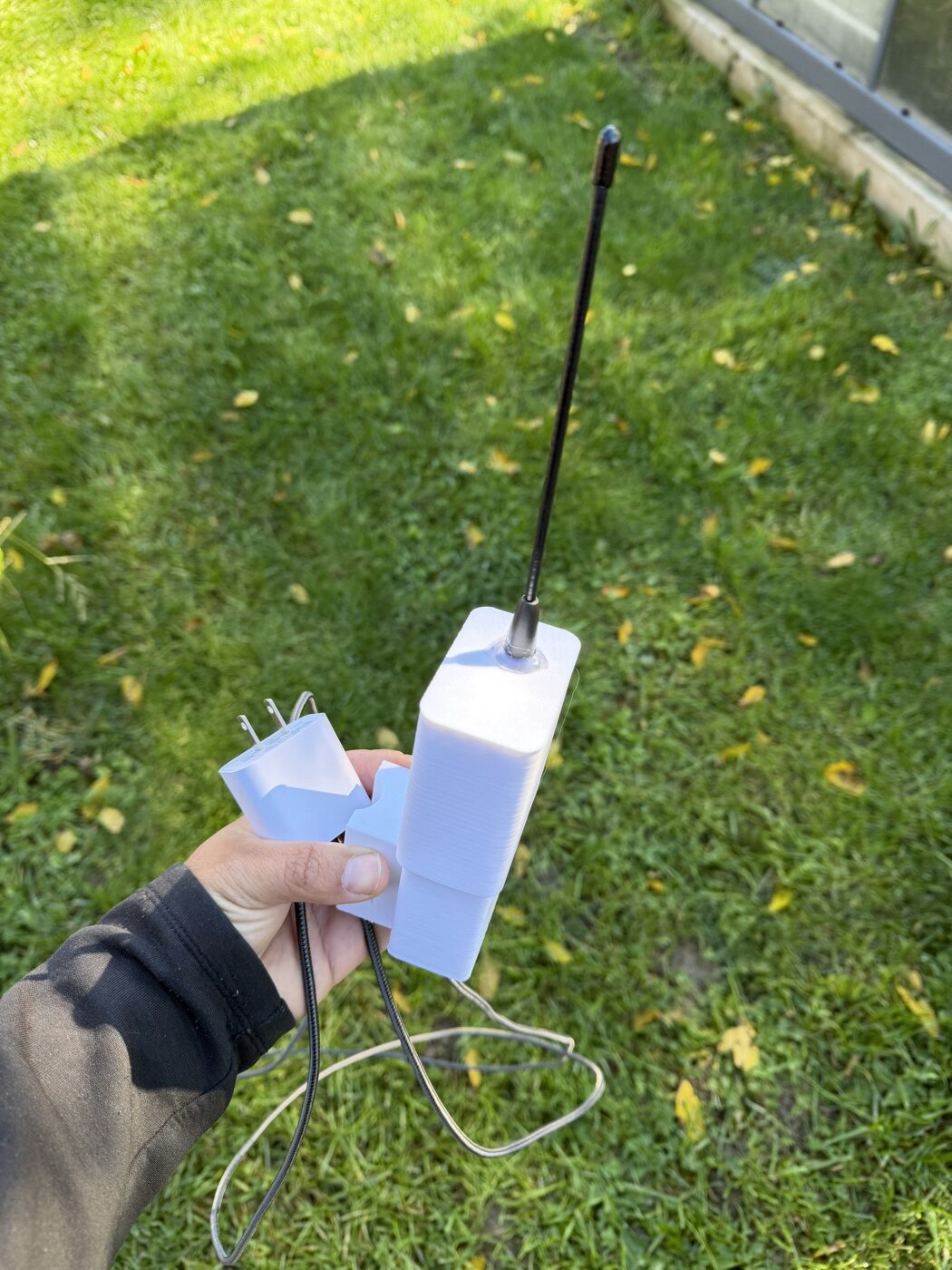
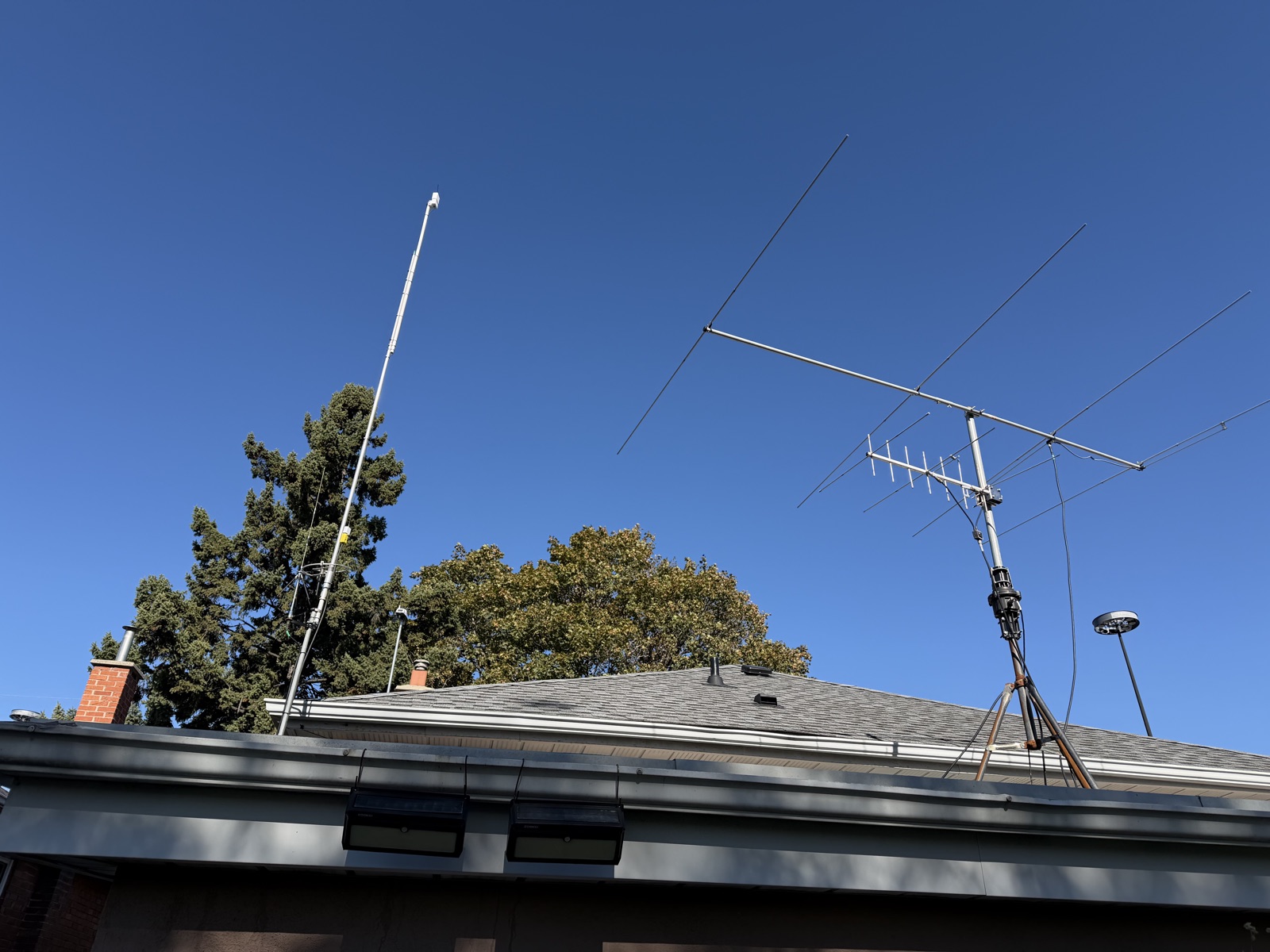
ThinkNode M1 details: Elecrow product page. The hardware can also run Meshtastic. See the Meshtastic hardware notes if you want that firmware.